Lost arts Revived in Slow Fashion from Los Andes and Patagonia.
The work is hard
Your fingers may bleed.
But each cloth stitched together
Brings together a community.
A world, our future world
Under one colorful quilt.
The new quilt of humanity.
~Julia Myers
Come, see the story of a beautiful garment
If you would hold the end of one of Animana's contemporary woven shawls and unravel it, its long, ancient path would lead you down south, away from North America, through Central Americas, until the yarn would reach the interior of Argentina, the place of its birth.
Bereft of any heavy garments, indulging in the warm humid climate, you would walk through the dry and wet Chaco landscapes, alongside the harvesters of Wichí tribe, until you would find the precious chaguar plant-the life giving plant also known as Bromelia hieronymi- that is slowly, patiently, spun before bathing in natural dyes to get its distinct colors. If intrigued to learn how to spin you may sit down and watch the laborer, who would smile an archaic smile, inviting you but unable to pass on her grandmothers' knowledge.
It's all in her hands.
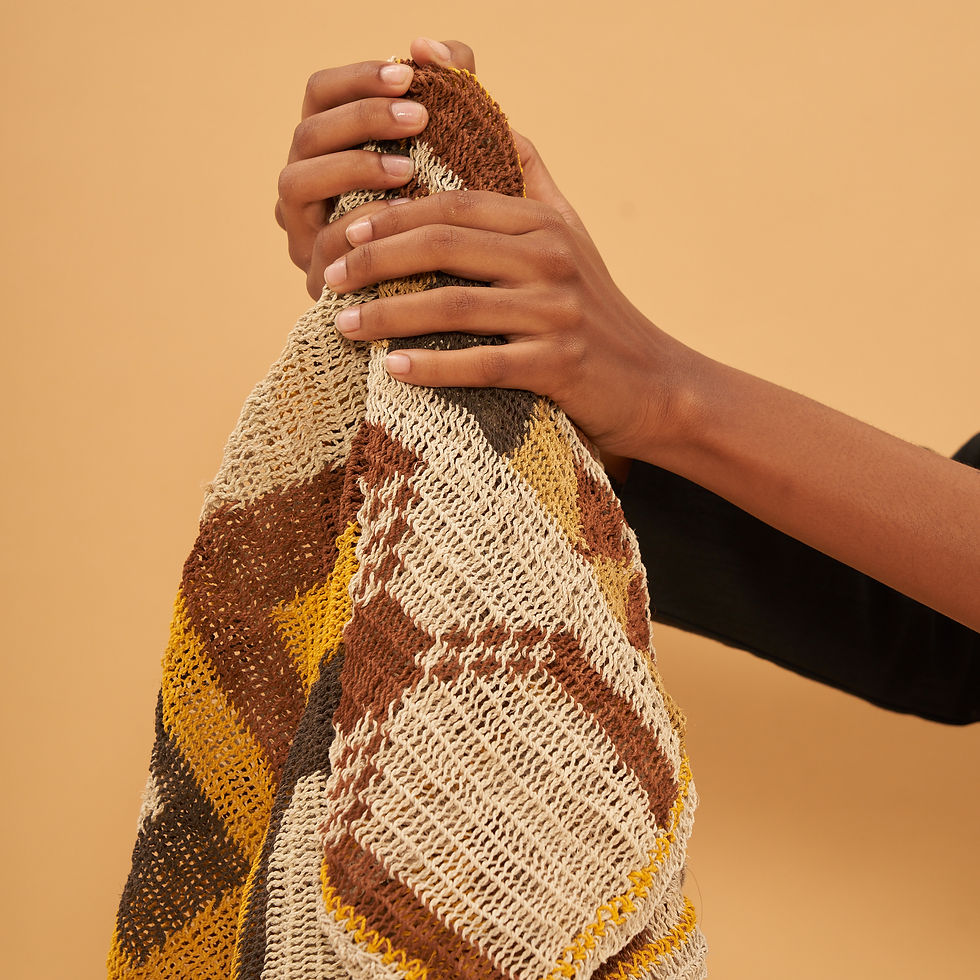
She has no words for it. As happy children would freely roam about you, maybe sharing a book, climbing a tree or teasing the dogs, you would observe the ancient secrets manifest as the Wichí weaver rapidly twists the dried fibers on her thighs, sometimes adding a little ash, to spin her thread.
Since sitting on the ground is a new sensation for you, you would now feel numb and stand up to shake your legs. The weaver would stay and spin for most of the day until the sweet dusk of the evening would call her back home.
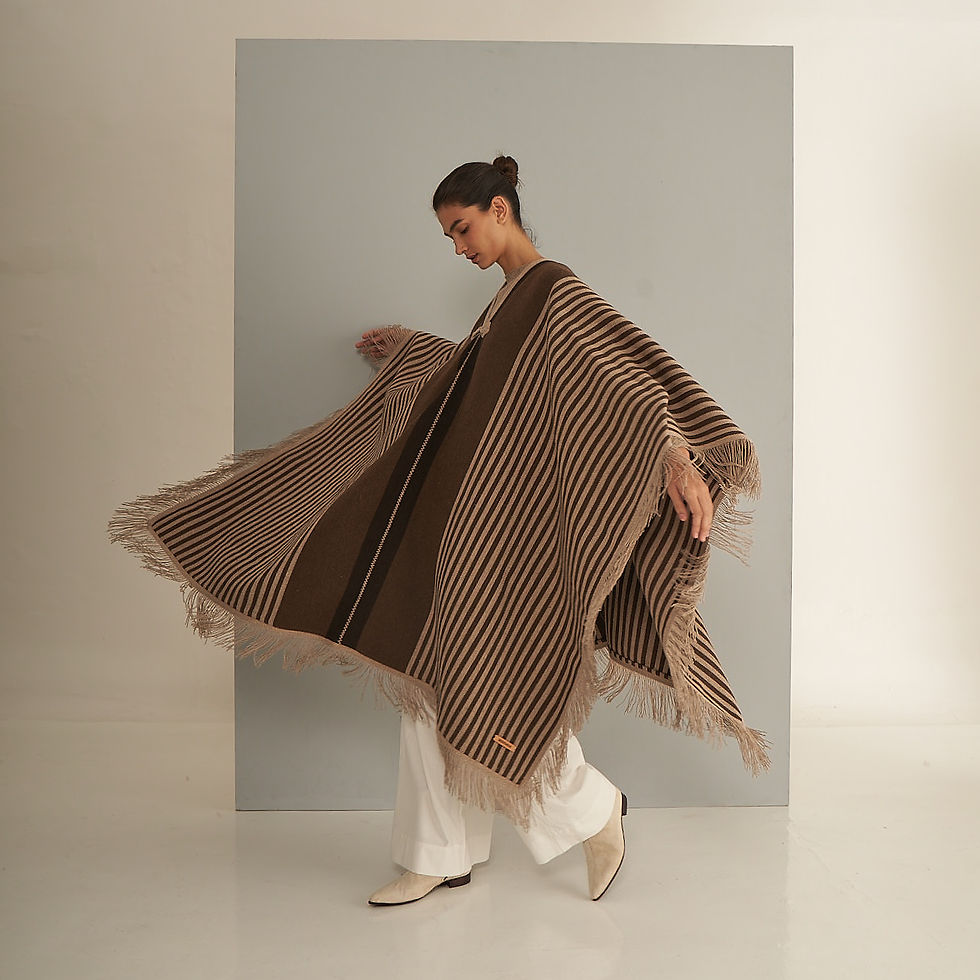
A day's work may give her one skein.
And this is how one of animaná's bespoke garments is born: the artisan brings centuries of technique; the designer brings a modern eye and the roads to international markets reviving the arts and stretching their appeal globally.
And you?
You, holding a poncho, a blanket, an ethereal, almost translucent shirt in your hands, would be holding the soulful work of hundreds local Argentinian craftsmen amalgamated in the harshness of their art, and softened by the whisper of its tradition, carrying you back to a time before the factory. At a time where guilds and communities of weavers, spinners, and tailors were protected in their craft, trained their apprentices, and made intricate, embellished and bespoke garments.
Each piece adorned and imperfect, yet, perfected in its beauty.
When you were known
Before container ships unloaded millions of garments to the shores of the west and took back our used disposed ones to the shores of Africa and Asia, there was intimacy. The tailor knew your shoulders, the shoe maker the distinct arches and asymmetry of your foot, the weaver and the spinner your family's stories and secrets.
Shein, Temu, cheap fashion, is unnatural to the natural rhythm of the ancient ways humans have clothed themselves against the elements, while adorning themselves with thread and leather, wool and silk. There is no craftsmanship, no soul work, no secrets unraveling at the hands of their makers; only the disgruntling bemoaning of steel's endless output, and numbness and pain of millions of humans leaning over an endless amount of garments- sometimes for fifteen hours a day. But instead of one skein of chaguar yarn, their raw hands produce hundreds of anonymous pieces of clothing, stamping them with a brand's label and their sweat. There is no joy there. No children playing freely or dogs barking or the river's quiet soothing song as the llama is sheared, dyes are drawn from bark, or cloth is woven.
Only pain. Exploitation. Man to man. We call this fashion.
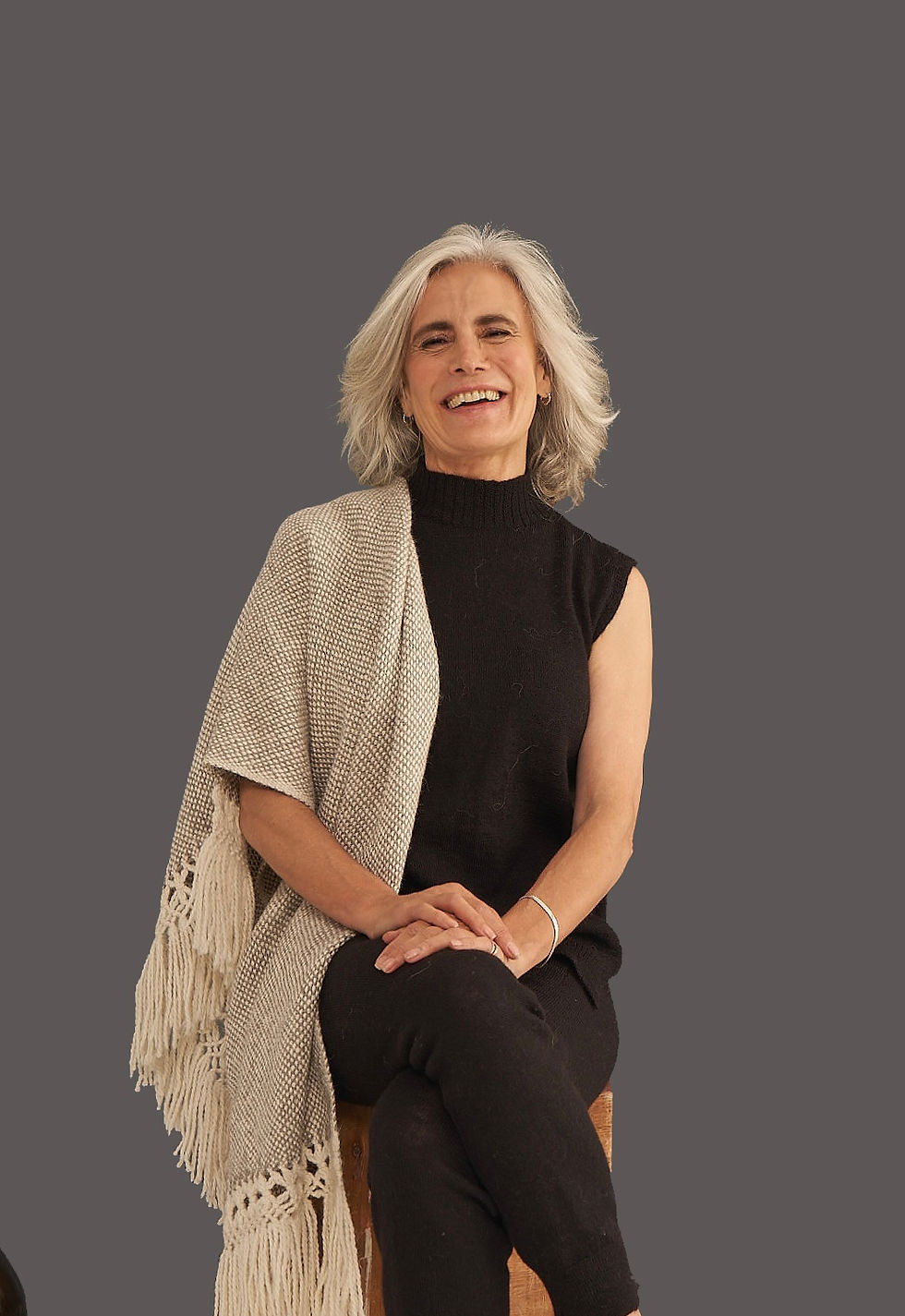
Adriana Marina grew up in the shadow of the Andes, watching the hands that made beautiful things receive so little in return. The inequality between the local artisan and the international brand was not an abstraction to her — it was a face, a wage, a life. She could not look away. Recognized as an Ashoka Fellow, a distinction reserved for the world's leading social entrepreneurs, Marina did not simply start a fashion label. She built a social enterprise, in wool and thread, for a different kind of world. Not a charity but a fair trade business, a guild, paying artisans what their knowledge is worth, and returning abundance to the communities that kept these arts alive.
A fair trade business, a guild, paying artisans what their knowledge is worth,
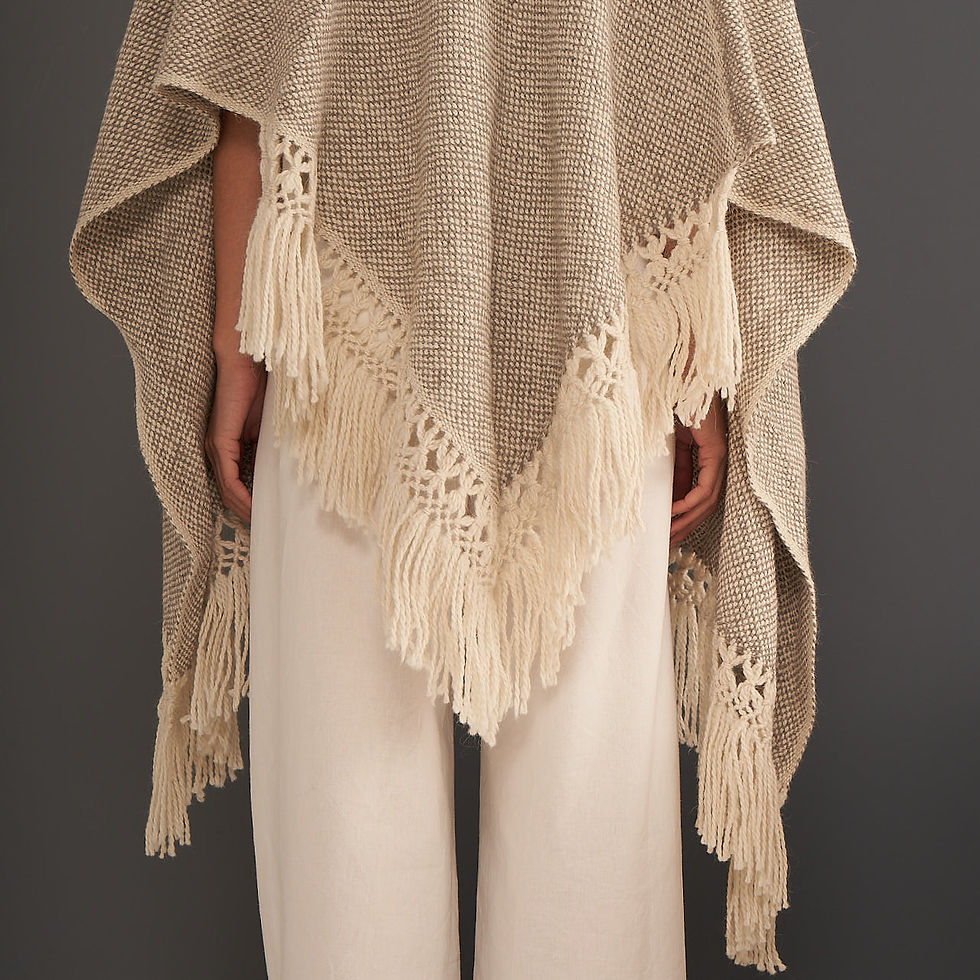
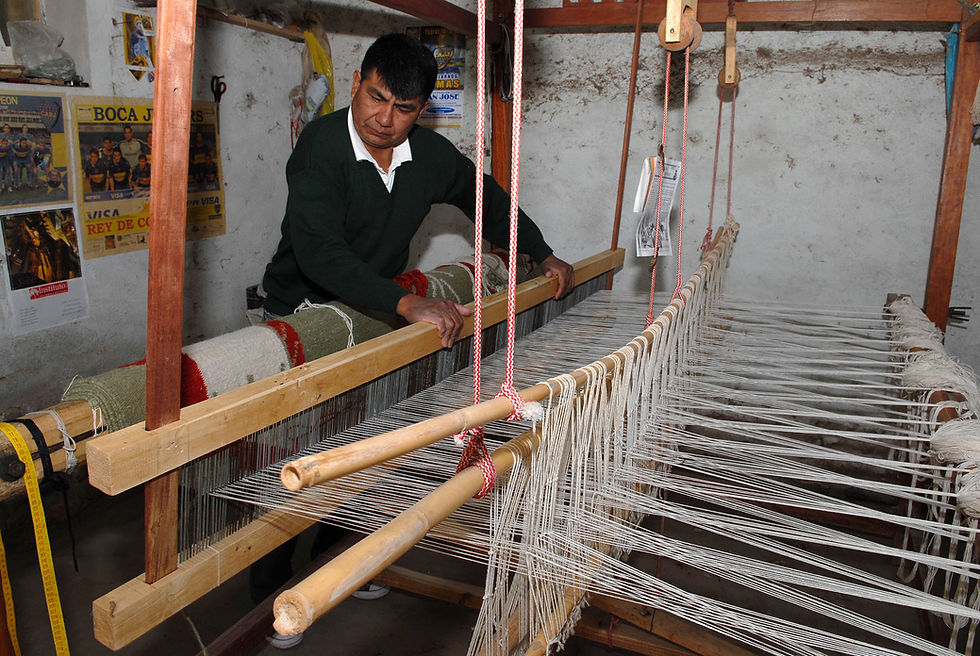
These aren't factory garments stamped out by the thousand. They're made slowly, deliberately, by people who know the wool, who understand the loom, who carry the knowledge in their hands the way a musician carries a melody in her fingers.
The fibers animaná works with are not chosen from a catalogue. They are chosen from a landscape. The baby alpaca, raised at altitudes above 4,000 meters where the air is thin and the cold is absolute, produces a fleece so fine it seems to defy the harshness of its origins. The vicuña — the smallest and most sacred of the Andean camelids, sheared once a year in an ancient ceremony called the Chaku — yields a fiber rarer than cashmere, warmer than wool, older than any fashion house on earth. The llama, the workhorse of the Andes for millennia, gives a fiber durable and warm, in a natural palette no dye factory could improve upon. And then there is the guanaco of Patagonia, wild and undomesticated still, its russet fleece gathered with the same care one brings to any wild and beautiful thing.
Alongside these, animaná works with merino wool, linen, cotton — and the chaguar. Always the chaguar. That ancient bromeliad of the northern Argentine forests, gathered, soaked, beaten, and spun by Wichí women.
Hecho por Nosotros — Made by Us
Behind animaná stands a wider ecosystem of advocacy. Hecho por Nosotros ("Made by Us") is a non-profit that works with artisan communities around the world to build fair, transparent supply chains while preserving the cultural heritage woven into every thread.
Collaborating with international institutions — including initiatives linked to the United Nations — Hecho por Nosotros advocates for responsible fashion, circular economy practices, and the social inclusion of the makers who bring beauty into the world. Their work is a reminder that fashion is never just fashion: it is economics, it is ecology, it is culture, it is justice.
Together, animaná and Hecho por Nosotros represent something rare: a business and a movement that refuse to be separated.
Come, wear a garment that carries its heritage
If the idea of clothing that carries history, supports living artisans, and outlasts a dozen fashion cycles speaks to you — animaná is waiting. Visit their world at animanaonline.com.ar.
This is the kind of making Khiton was founded to celebrate.


Comments